







Imagine your tooth is a stone wall. Every day, acid rain falls on it. If the wall has time to dry out and harden between showers, it will last a long time. But if it rains almost non-stop, the wall starts to crumble — and you won't notice until the first crack appears.
That's exactly how tooth decay works. And understanding this process is the first step to preventing it.
According to a long-term study published in the Journal of Dental Research, it takes an average of 3–4 years for tooth decay to penetrate through the enamel in adults. In children, this can happen in less than a year. Yet most people only visit the dentist when decay causes pain — that is, at an advanced stage when the procedure is far more complex.
How does tooth decay actually develop?
Every day, plaque forms on your teeth — a soft, sticky film full of bacteria. These bacteria are a natural part of our oral environment. The problem begins when they receive a regular “food supply” in the form of sugars and starches from what we eat.
Bacteria process the sugars and produce acids as a by-product. These acids then etch the tooth surface — the enamel. This process happens every day, after every meal, after every sip of a sweet drink.
The good news: your tooth can fight back. Saliva contains minerals that continuously “repair” the enamel. The problem arises when acid attacks happen too frequently and the tooth can't keep up with regeneration.
Minutes, days, months: how decay progresses over time
Most people think decay comes from a single sweet treat. That's not true. Decay is the result of a repeated, long-term process. Here's the exact progression:
-
10–30 minutes after eating
Bacteria in plaque start processing sugars. Acids form and begin attacking the tooth surface. You don't feel a thing yet.
-
230–120 minutes after eating
The acidic environment in your mouth persists. Enamel gradually loses minerals and weakens. You feel nothing, nothing hurts.
-
32–6 hours after eating (if you stop eating)
Saliva begins to “repair” the tooth. It delivers minerals back and helps neutralise acids. If the tooth has enough time, it can partially recover.
-
412–24 hours without thorough brushing
If plaque remains on the teeth, bacteria multiply and the entire process repeats with the next meal — often more intensely.
-
5Several days
The tooth is repeatedly exposed to acids multiple times a day. The balance between damage and repair starts to tip.
-
62–4 weeks
The first visible change may appear on the tooth — a white spot. This is early-stage decay. Still no pain.
-
71–3 months
The enamel continues to weaken. Decay starts to deepen. Still painless, often unnoticed.
-
83 months and beyond
Decay penetrates deeper into the tooth. The tooth may still look “fine,” but the process is already underway. Symptoms may only appear later.
Pain only arrives at the end of this process — when decay is already advanced. Waiting for pain is the worst strategy you can choose.
The problem isn't what you eat. It's how often.
This is one of the most important — and least known — facts about tooth decay. What matters isn't the amount of sugar, but the frequency of intake.
If you eat an entire slice of cake in one sitting, your teeth are exposed to acids for roughly an hour. But if you snack on biscuits one by one throughout the day, the acidic environment in your mouth persists almost continuously — and the tooth can't keep up with repair.
Jana, 34, works from home. She sips sweetened tea all day and occasionally reaches for a nut or a piece of chocolate. She brushes twice a day and visits her dentist regularly. Yet over two years, three new cavities appeared.
The problem wasn't hygiene. It was that her teeth never had even an hour of rest. The acidic environment in her mouth never had time to neutralise.
- Frequent snacking throughout the day
- Sweet or flavoured drinks sipped in small amounts
- Prolonged sipping of coffee or tea with sugar
- Inadequate or skipped brushing
- Chewing sugary gum as a “substitute” for brushing
Why does decay develop faster in children?
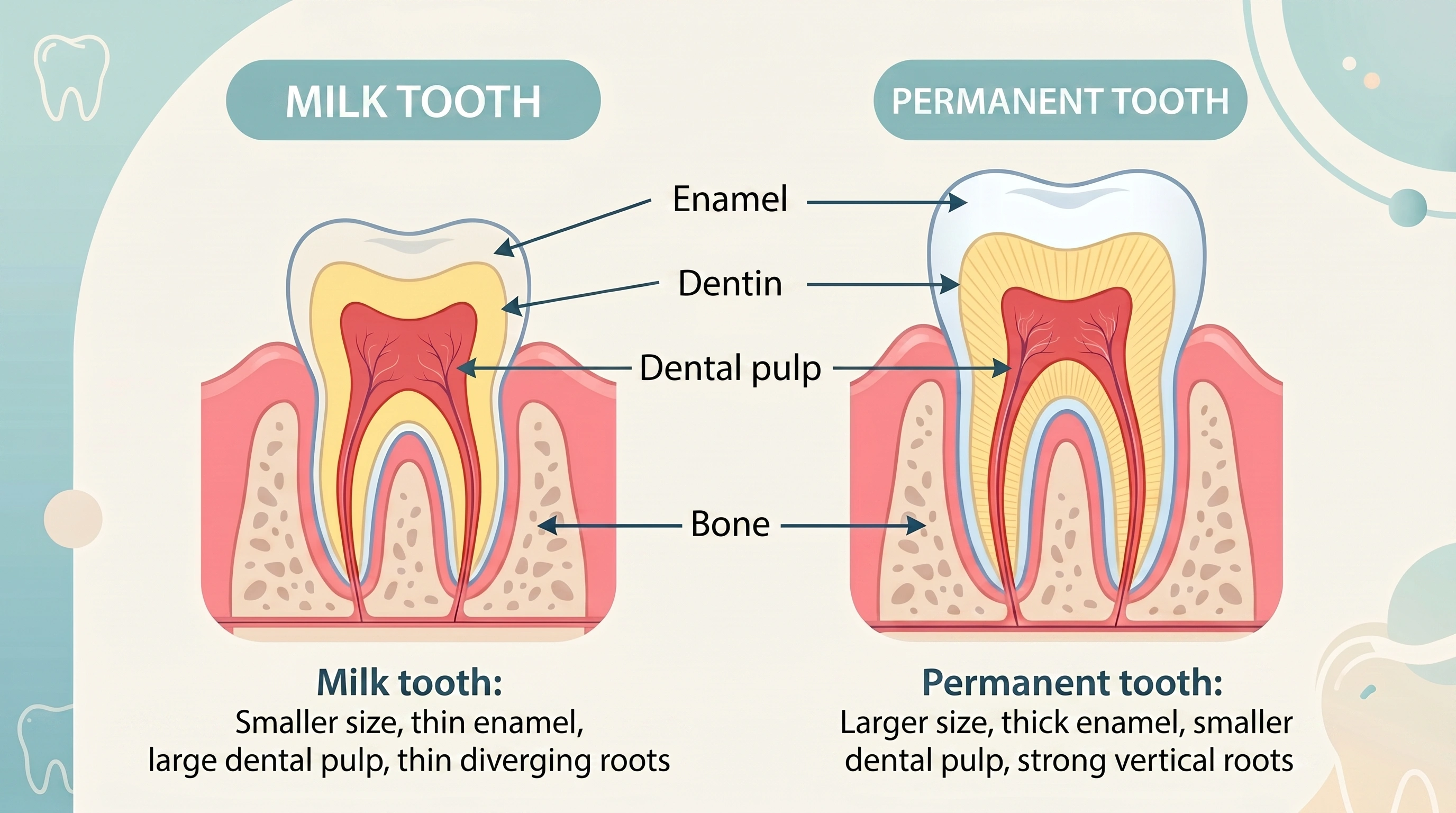
In children, the entire process happens significantly faster than in adults. The reasons are purely anatomical:
- The enamel of primary teeth is thinner and less mineralised than in permanent teeth.
- The dentine is softer and more permeable — bacteria reach the nerve more quickly.
- Decay can deepen within months, sometimes even weeks.
A very common myth says: “Baby teeth will fall out anyway, so why bother?” This attitude can have serious consequences.
- Pain and reduced quality of life for the child
- Inflammation and infection that can spread
- Damage to the developing permanent tooth directly beneath it
- Impact on future tooth alignment — primary teeth hold space for permanent ones
The World Health Organization (WHO) states that tooth decay is the most common chronic childhood disease worldwide. Yet it is largely preventable. Research shows that children with untreated decay have demonstrably worse school performance, poorer sleep, and a lower quality of life — all due to chronic pain that feels so “normal” they don't even acknowledge it.
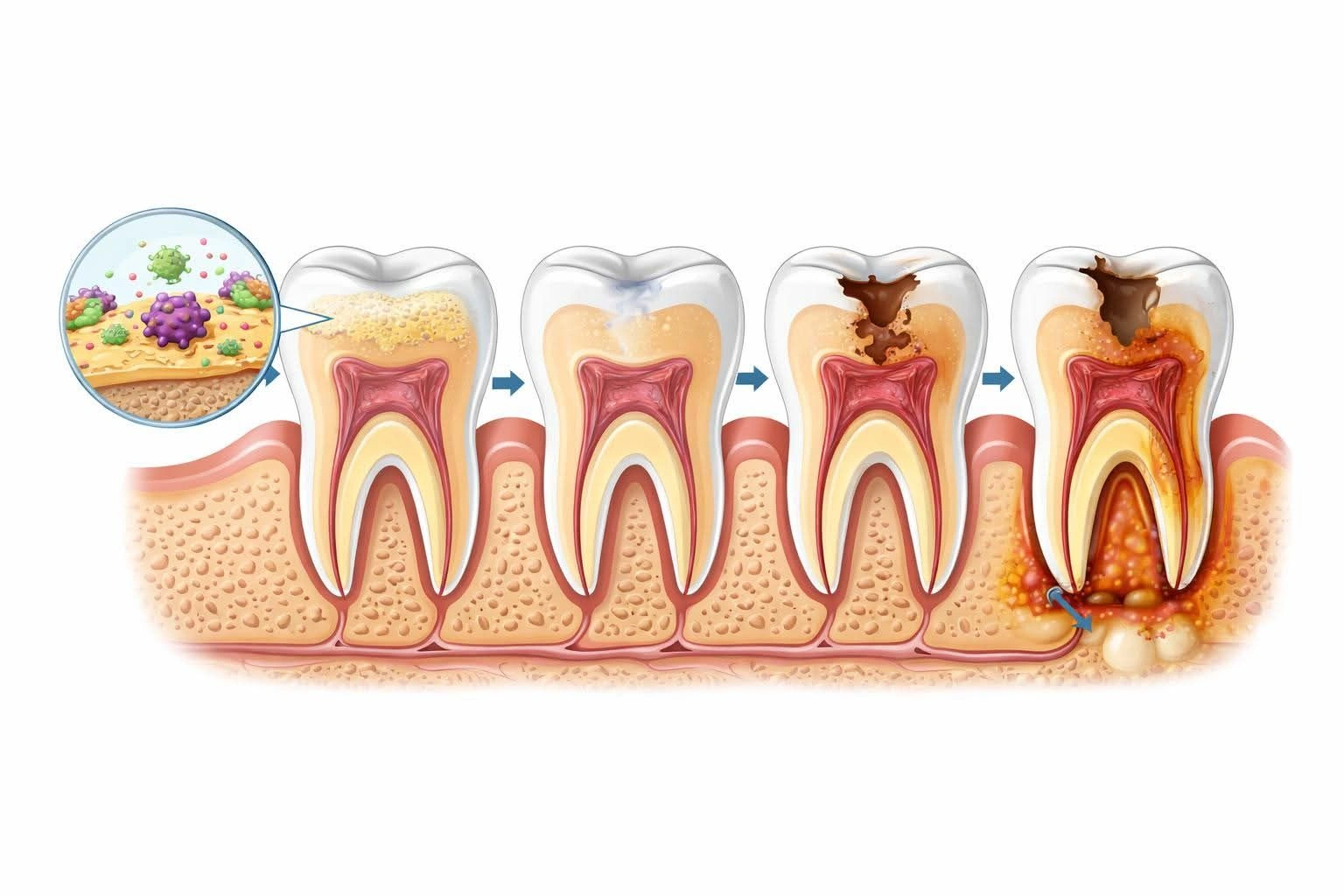
How decay progresses inside a tooth: 5 stages you should know
Think of a tooth as an onion-like structure — layer by layer. Decay passes through these layers gradually, and each stage means a different type of treatment.
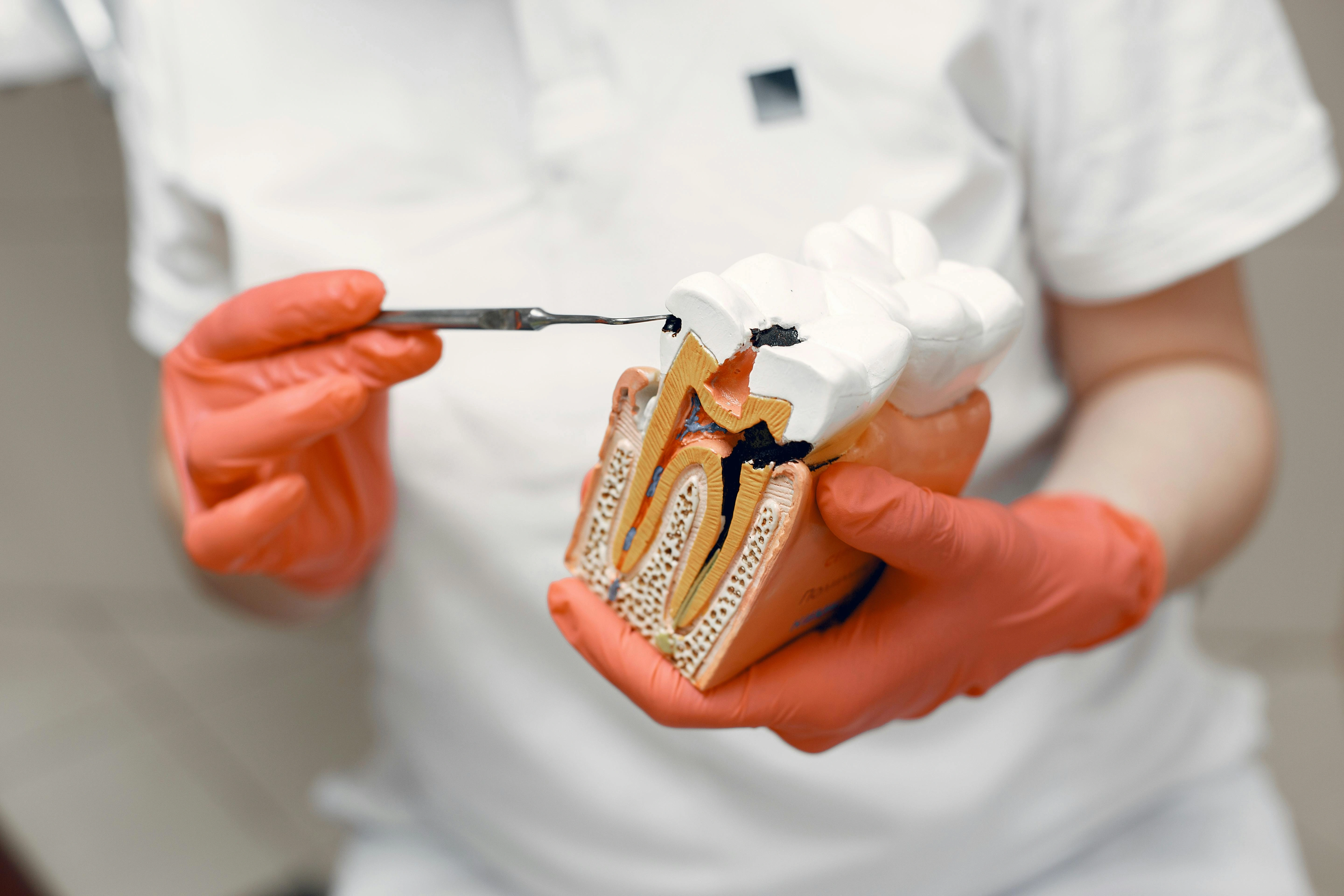
Decay starts on the tooth surface, in the enamel. This is the hardest part of the tooth, but it has no nerves. That's why nothing hurts, changes are often invisible, and the process unfolds completely unnoticed.
✅ At this stage, the tooth can be saved very gently, sometimes even without drilling — for example through remineralisation or preventive treatment.
Once decay breaks through the enamel, it reaches the dentine. Dentine is softer and contains tiny tubules leading to the nerve. You may notice sensitivity to cold, a reaction to sweets, or an occasional “sting.” The discomfort often fades on its own — which can make it seem like everything is fine. It isn't. At this stage, a standard filling is usually enough.
Decay approaches the nerve and begins to irritate it. Symptoms:
- Pain when biting
- Lingering discomfort after the stimulus
- Occasional spontaneous sensitivity
The situation is on the edge. Sometimes the tooth can still be treated with a filling; other times the nerve is already reacting strongly and root canal treatment is needed.
Bacteria penetrate into the pulp chamber. Symptoms are pronounced:
- Severe, throbbing pain
- Pain without any trigger
- Worsening with heat
- Night-time pain
At this stage, a filling won't do. Root canal treatment is necessary.
Without treatment, the nerve inside the tooth dies and the pain may temporarily subside. But this doesn't mean the problem is solved. Bacteria remain in the root, inflammation spreads into the bone, and an abscess can form. Swelling, pain, and fever may follow. This is an infection that requires immediate attention.
Tooth decay develops over a long time — we just often don't know about it until it starts hurting. Pain only comes at an advanced stage. “Let's wait, it'll pass” is the worst strategy. An early check-up means a smaller procedure and a much better chance of saving the tooth.
How to prevent tooth decay: practical steps
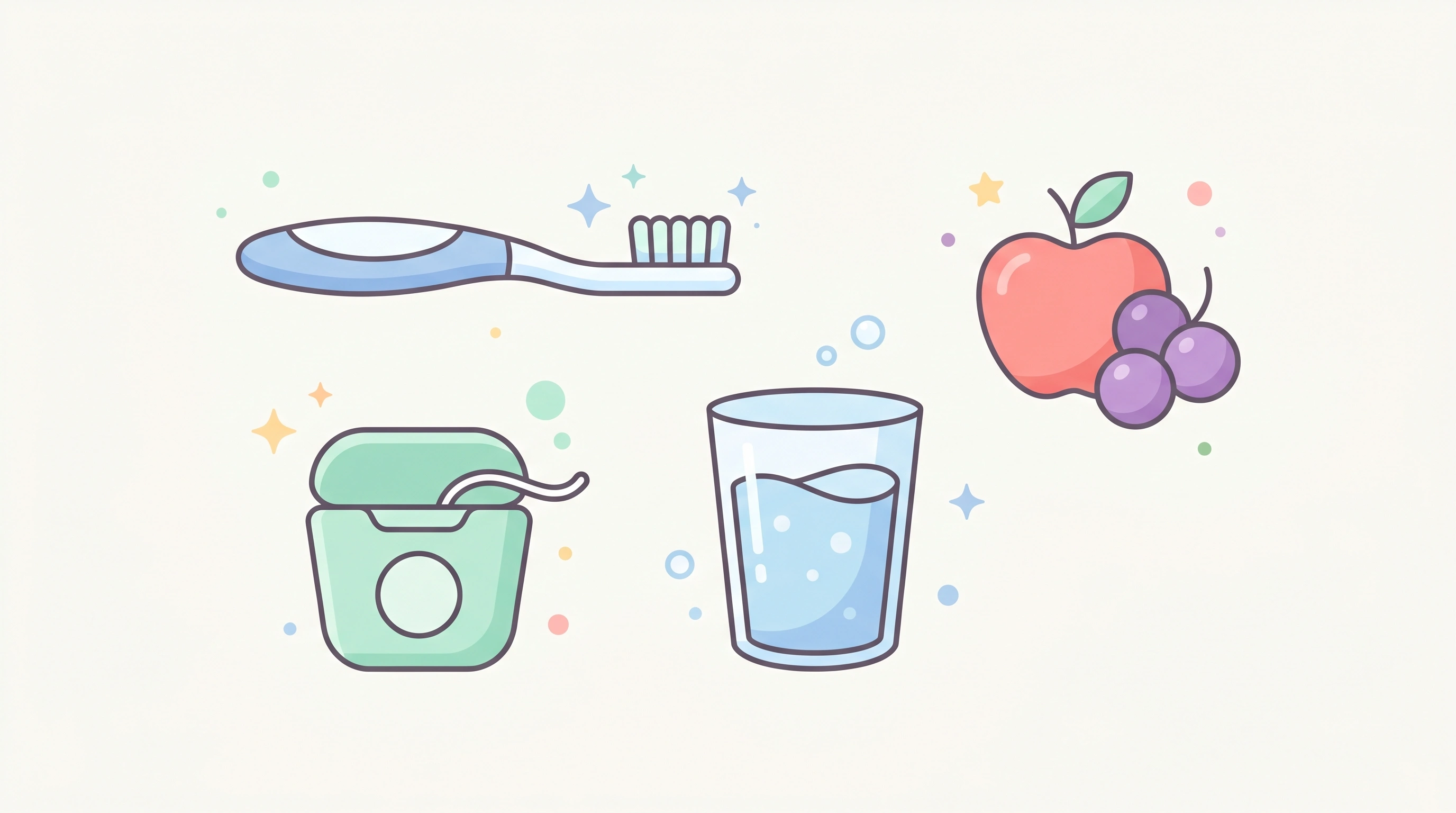
Preventing tooth decay doesn't rely on a single miracle product. It relies on a combination of good habits that complement each other.
- Regular check-ups — once a year for adults, twice a year for children. Your dentist sees what you can't.
- Early treatment of even small cavities — the sooner, the simpler and less costly the procedure.
- Mindful eating habits — focus on gaps between meals. Ideally 3–4 meals a day, with only water in between.
- Thorough home dental care — brushing twice a day, with at least one session following a full routine recommended by your dental hygienist — including interdental brushes, single-tuft brushes, and floss.
- Professional dental hygiene — 1–2 times a year. Removes tartar and plaque that home brushing can't reach.
- Gentle oral care — a healthy oral mucosa, adequate hydration, and products free from aggressive chemicals.
Recent research shows that saliva composition plays a bigger role in decay prevention than previously thought. People with lower saliva production (for example due to medication, stress, or dehydration) are significantly more prone to cavities — regardless of how well they brush. Staying properly hydrated and looking after your overall wellbeing directly impacts the health of your teeth.
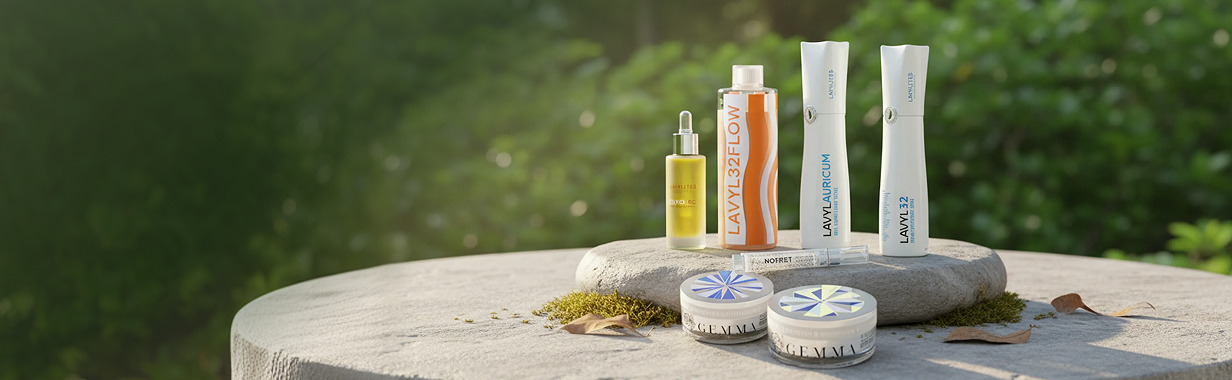
Lavyl 32 Toothmilk
Tooth milkA gentle toothpaste with a natural formula that cleans softly while supporting a feeling of freshness and comfort in the oral cavity. Free from aggressive abrasives, suitable for daily use by the whole family.
Learn moreLavyl 32 Flow (Sensitive)
MouthwashA mouthwash with natural ingredients for a feeling of cleanliness and freshness throughout the day. It complements mechanical brushing and helps maintain the natural environment in the oral cavity. Ideal as part of your morning and evening routine.
Learn moreLavyl 32
SprayA handy spray for an instant feeling of relief and soothing in the oral cavity. Customers appreciate it especially when experiencing sensitivity or irritation — it fits easily into a pocket or handbag.
Learn moreConclusion: The best cavity is the one that never forms
Tooth decay is treacherous precisely because it's silent. It doesn't hurt right away. It gives no clear signal. It grows slowly, invisibly, and only when it's advanced does it make itself known.
But now that you know exactly how the process works, you hold something valuable: the ability to act before the drill becomes necessary. Regular check-ups, good habits, and gentle oral care — these are the things that truly work.
Your teeth serve you for a lifetime. They deserve to be cared for with the respect and attention they've earned.
Looking for a natural approach to dental care?
Discover the Lavyl 32 range — gentle dental care that brings thousands of people a feeling of cleanliness and comfort the natural way.
Browse products