







Stroke and blocked arteries are not an accident. They are the result of long-term pressure.
You may have been through a moment you can't forget. Sudden weakness, slurred speech, loss of movement on one side of the body. Or during a check-up you were told you have significantly narrowed arteries, high blood pressure, “bad cholesterol”. It all feels as if something suddenly went wrong – as if a storm came out of a clear blue sky.
In reality, this is not about chance. Arteries do not clog overnight. A stroke is not an isolated episode torn out of context. It is the culmination of a story that has been written for years:
- high blood pressure you have “not paid attention to” for a long time,
- chronic inflammation that was not visible, but constantly present,
- thicker blood, which moves less easily and irritates the vessel wall more,
- oxidised cholesterol, which behaves differently in an inflammatory environment than in a calm one,
- insulin resistance, which quietly impairs metabolism and arteries for years.
Your body in this story is not your enemy. It is a mirror of your way of living. Blood does not rebel. Blood responds.
Most vascular complications do not arise as an isolated “attack from outside”. They arise from within, from an environment that has been forming for years – often without the body ever having a real chance to rest.
Blood as a mirror: what is it actually showing you?
Imagine blood as a liquid environment flowing through every millimetre of your body. It carries oxygen, nutrients, hormones, immune signals. At the same time, it carries the imprint of your habits – every day, every meal, every night, every moment you were breathing shallow and fast under pressure.
When you look at blood test results or an angiography report, you see numbers and descriptions. But behind them there is a whole system:
High blood pressure
It is not just a number on a blood pressure monitor. It is information that your arteries have long been functioning in a high-tension environment – mechanical and neural. Pressure is the result of many subtle influences at once, not of one “bad” value.
Chronic inflammation
Inflammation is not only a bacterial infection. Chronic, low-grade inflammation is very subtle – and therefore more insidious. It changes the behaviour of the vessel wall, affects blood clotting and alters the properties of cholesterol.
Thickened blood
Thicker, “stickier” blood tends to form clots, has more difficulty entering tiny capillaries and mechanically irritates the vessel wall. It reflects hydration, diet, stress and movement – or their absence.
Oxidised cholesterol
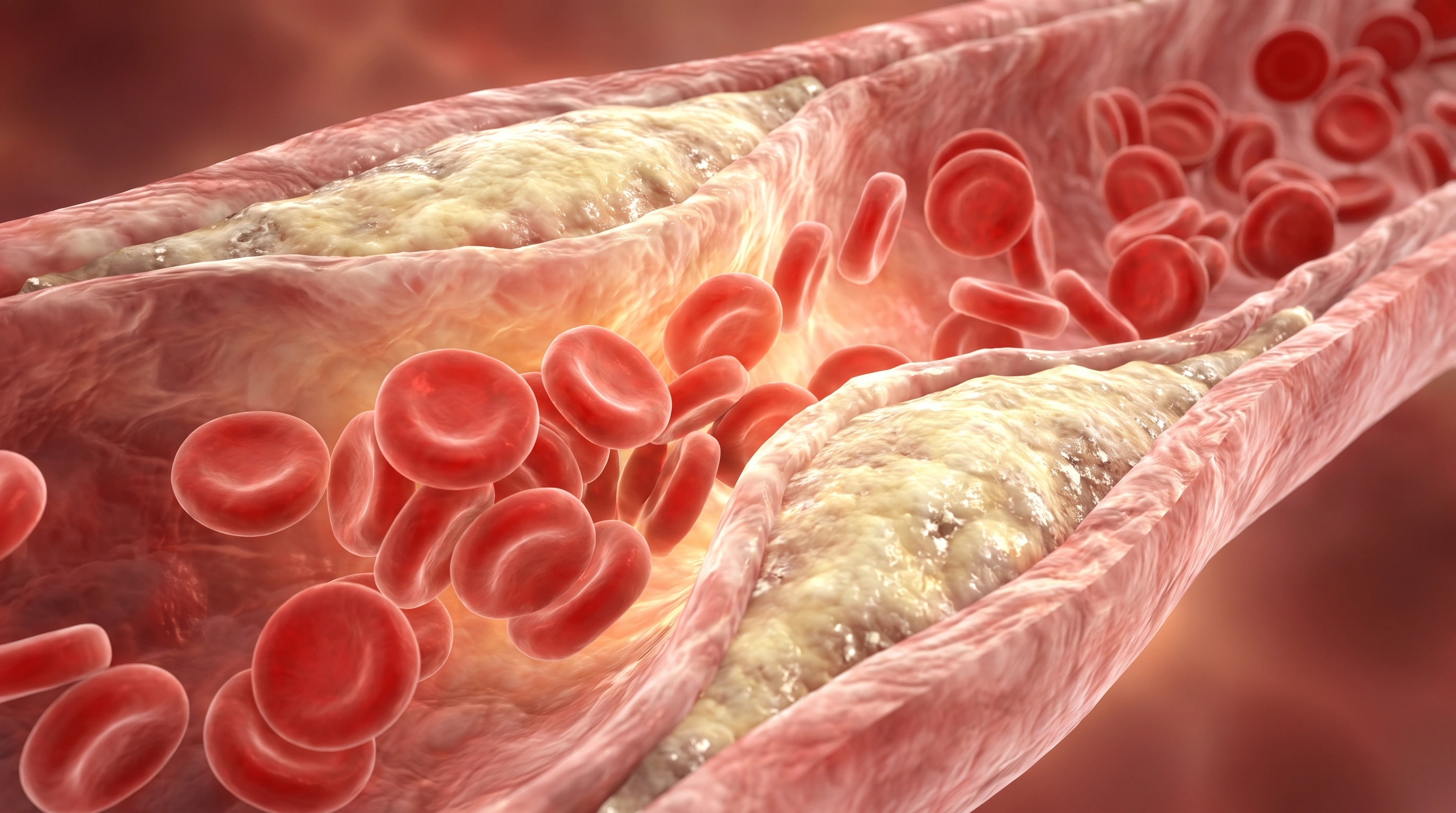
Cholesterol as such is not an enemy. The key difference lies in whether it circulates in a calm, anti-inflammatory environment, or in a body full of inflammation and oxidative stress. In the latter case, it much more easily contributes to the formation of vascular plaques.
Insulin resistance
Years of silent blood sugar swings and insulin excess leave traces on the vessel wall. Insulin resistance is one of the most frequently overlooked factors in cardiovascular risk.
Nervous system on alert
Chronic stress and sustained activation of the sympathetic nervous system keep arteries tense, increase inflammation and exhaust repair mechanisms. Arteries live in the chemistry your nervous system creates every day.
What medicine does brilliantly – and where its mandate ends
When an acute event happens, you need medicine. Fast diagnostics, thrombolysis, blood thinners, statins, stents, intensive care – in a critical moment there are no alternatives. This is not the place for experiments or downplaying.
Acute medicine can:
- save a life in the case of massive ischaemia or bleeding,
- dissolve a clot when there is still time,
- stabilise pressure, rhythm and core parameters,
- reduce the risk of another clot in the highest-risk period.
All of that is crucial. Without it, mortality and disability statistics would be much worse. But there is one thing medicine mostly does not do – and often cannot do:
Acute medicine does not run your everyday life. It does not change your breathing. It does not teach your nervous system how to switch into safety. It does not arrange your plate. It does not go for walks in your place. It treats the consequence – not the environment in which the problem arose.
You may know someone who has had a TIA (transient ischaemic attack) or a small stroke. In hospital they received medicines, dose adjustments, follow-up recommendations. Back home, however, they were left alone with the same stress, the same breathing, the same diet, the same routine. On paper they were “treated” – but the internal environment had barely changed. A year later, the second event came.
This article is not about criticising medicine. It has a different ambition: to show you what is in your hands. Where the possibility of acute intervention ends, the space for your daily work begins.
Breathing: the hidden modulator of blood pressure, inflammation and arterial elasticity

You have your breath with you all the time. You don't need to go to a pharmacy or hospital for it. And yet most people use it in a way that burdens the body in the long term – without even knowing it.
Notice how you breathe when:
- you are afraid of not meeting a deadline,
- you are reading bad news,
- a family member becomes ill,
- you feel you “have to handle everything”.
In those moments, most people breathe faster, more with the upper chest than the belly, switch from nasal to mouth breathing, and unconsciously hold their breath or create tiny, tension-filled pauses.
This is not a small detail. Breathing directly affects the level of carbon dioxide in the blood, vascular tone, heart rate and pain perception. Chronic hyperventilation is a silent companion of many cardiovascular issues.
How hyperventilation burdens the arteries
When you breathe fast and shallow, you exhale too much carbon dioxide. CO₂ is not just a waste gas – it is a key regulator of vascular tone. When levels drop, arteries constrict, blood pressure rises and blood flow shifts. Chronic hyperventilation creates an internal environment in which arteries cannot truly rest.
Multiple studies show that slower, regulated breathing (around 6 breaths per minute) improves heart rate variability, reduces sympathetic activity and can help lower blood pressure in some people. It is not a magic pill – it is a steady, long-term influence on the nervous system and the arteries, accessible to everyone and free.
Practical exercise: slowing the breath without forcing it
If you have had a serious vascular event or very high blood pressure, it is always wise to agree with your doctor what kind of exercise is safe for you. What follows is a gentle framework – not diagnostics or treatment. It is an invitation to gentle regulation.
1. Nasal breathing
Start by paying more attention during the day to whether you breathe through your nose or your mouth. Nasal breathing naturally filters the air, regulates its temperature and humidity, and supports a different dynamic in the respiratory system than chronic mouth breathing.
2. Diaphragmatic breathing
Place one hand on your belly and the other on your chest. As you inhale, let your belly gently rise first, then your chest. Let your exhale be looser and slightly longer than your inhale. Do not push. Look for softness.
3. Slowing the rate
A few times a day, try a series of 10 breaths: inhale for 4–5 seconds, exhale for 5–6 seconds. Without feeling breathless, without force. Just a gentle slowing down that gives your arteries room to unwind.
The goal is not to “breathe perfectly”. The goal is for your breathing not to be permanently stuck in alarm mode. Your arteries need periods when they are not under the pressure of your stress and your hyperventilation.
Nervous system: when the body lives in a state of permanent alarm
The nervous system has two main faces. One you know as fight-or-flight mode – survival, mobilisation, tension. The other as rest-and-digest mode – calm, digestion, regeneration. Both are useful. The problem arises when the first takes over and leaves the body no space for the second.
If you have had a stroke, TIA or long-standing high blood pressure, it is likely that your body has spent many years in a state of internal alarm – often even when you were “just sitting at your desk”.
An activated sympathetic nervous system increases heart rate, constricts arteries, promotes stress hormone release and makes it harder to repair the vessel wall. In the short term this is useful. Under chronic stress it is very costly for your arteries.
What “constant alarm” looks like in everyday life
- you never have time to “do nothing”,
- sleep is more survival than true recovery,
- you feel guilty for resting,
- you feel that without you everything will fall apart,
- your body sends tension signals, but “you have to keep going”.
This is not moralising. It is a description. Arteries are sensitive to the dominant mode of your nervous system. The more room there is for the calm phase – rest, digestion, gentle movement, feeling safe – the better the conditions for repairing the vessel wall.
Practical pillars for stabilising the nervous system
Micro-breaks during the day
Instead of aiming to “collapse on the sofa once a week”, start with short pauses. 2–3 minutes of conscious breathing, stretching, a few steps without your phone. The nervous system registers these safety signals more than one big holiday once a year.
Daily rhythm
Arteries do not like chaos. More regular times for sleep, meals and movement give the nervous system orientation. Rhythm creates less internal confusion and fewer extreme swings – this is not discipline for its own sake, it is physiology.
Safety instead of performance
If your body has run on performance for years, you will need time to relearn what safety feels like. Allowing yourself to regenerate is not weakness. It is one of the highest forms of responsibility towards your own body.
Anti-inflammatory nutrition: when your plate either calms or inflames
Food is not just calories. It is information. Every meal turns certain processes on or off, affects inflammatory pathways, and changes levels of sugar, insulin and fats in the blood. When we talk about arteries, we are also talking about what you do on your plate every day – and what you have repeated for years.
An inflammatory environment in the body promotes:
- the formation of atherosclerotic plaques,
- oxidation of cholesterol,
- stiffening of the vessel wall,
- higher clotting activity and easier clot formation.
Cholesterol as a number is only part of the story. The rest happens in the environment in which that cholesterol circulates. It is not only about how much you have – but in what “climate” it travels.

What typically fuels the fire of inflammation
- frequent intake of highly processed foods,
- excess sugar and sweet drinks,
- regularly overheated oils,
- trans fats and industrial fats in packaged products,
- chronic overeating combined with the feeling “I have to finish this”.
Large population studies repeatedly show that diets rich in vegetables, fruits, high-quality fats (such as omega-3s), nuts, seeds and minimally processed foods are linked with a lower risk of cardiovascular events. It is not about a single meal or a short-term diet – it is about a long-term pattern.
How to support your arteries with your plate
More anti-inflammatory foods
Regularly include vegetables, herbs, spices with anti-inflammatory potential, high-quality omega-3 sources (such as flaxseeds), nuts and seeds. This is not a “diet punishment” – it is a way to give your blood a different kind of signal.
Fewer blood sugar spikes
Insulin resistance often precedes visible vascular problems by many years. Working on glycaemic stability – fewer sweet drinks, more balanced meals, fewer fast carbs on an empty stomach – helps reduce blood pressure, inflammation and arterial stress.
Fat quality
Shift your focus from “how much fat” to “what kind of fat”. High-quality, less processed fats create a different environment than trans fats and constantly overheated oils. Your arteries can sense the difference – and they respond to it.
Cholesterol: not a demon, but a messenger of your inner environment
Cholesterol is often portrayed in the media and in clinics as the enemy. In reality it is a substance your body needs – for hormone production, cell membrane structure, and nervous system function. The problem arises only when it combines with an unfavourable internal environment.
Yes, there are situations where statins or other medications are essential. It can be a matter of life, or of preventing another serious event. This is not something to trivialise or to change on your own.
At the same time, one simple principle holds: if the environment in which the problem arose does not change, you are only treating the consequence – not the cause. You modify a number, but you do not change the system.
What really affects the “quality” of cholesterol
- the level of chronic inflammation in the body,
- oxidative stress (smoking, lack of protective nutrients, inappropriate load),
- blood sugar swings and insulin resistance,
- the overall picture of your diet and fat quality,
- movement and overall metabolic flexibility.
When you work on these pillars, you are not working “just on cholesterol”. You are working on the entire environment in which blood and arteries live.
Movement: a medicine that cannot be written on a prescription pad
Deep, regular movement is one of the most underrated tools for vascular health. It is not just about burning calories. It is about what movement does to the structure and function of your vascular system itself.
Regular movement:
- trains arterial elasticity and the ability to react to changes in pressure,
- supports better blood pressure regulation,
- improves insulin sensitivity,
- reduces inflammatory markers,
- supports the nervous system in a different dynamic than seated stress.
You do not need to become a marathon runner. You do not need a gym membership. But your body needs movement that is regular rather than sporadic, sufficiently deep and adapted to your health status. Ideally after discussing it with your doctor or physiotherapist – especially if you have had a serious vascular event.

One hour of intense exercise once a week is not the same as 20 minutes of walking every day. Arteries respond to consistency, not to occasional intensity. Consistency is more important than performance.
Asthma, hyperventilation and inflammation: the same pattern in a different disguise
You may have asthma alongside your vascular problems. You may have long-term trouble breathing, wheezing, a feeling of not getting enough air. You may have years of inhalers, medications, and anxiety about every weather change or exertion behind you.
These issues are not coincidentally common in people with vascular problems. They are part of the same pattern:
- chronic hyperventilation as a basic breathing pattern,
- inflammation of the airways as a reflection of systemic inflammation,
- a nervous system in permanent alarm, also affecting bronchial tone,
- stress sensitivity expressed in both arteries and the respiratory system.
Arteries, respiratory system, nervous system – these are not separate worlds. They are parts of one organism. As you begin to change the environment they function in, you affect all of them at once.
This is not a quick fix. It is a path of responsibility.
It might be comforting to hear that there is one pill, one exercise, one supplement that solves everything. But that would not be true. And after what you have gone through, you deserve the truth – not mere comfort.
Your body is the result of a story that has been written for years. You do not have to rewrite it overnight. You can start editing it gently – chapter by chapter, pillar by pillar:
1. Breathing
Start by noticing how you breathe several times a day. Without judgement, just awareness. Then gradually add gentle slowing, more nasal and diaphragmatic breathing.
2. Nervous system
Build micro-breaks, rhythm, moments of safety. You may need support – a therapist, a community, a guide. That is not weakness. It is work at the foundation.
3. Nutrition
Do not start with a crash diet. Start with small but concrete changes – less sugar, less burnt fat, more real food that does not overwhelm your body.
4. Movement
Give your body regular movement – not as punishment, but as foundation. Start with walking. Consistency matters more than intensity.
5. Sleep
During sleep your arteries repair what they had to endure during the day. Sleep is not a luxury. It is one of the most powerful regeneration tools you have.
This is not a quick fix. It takes time. It takes patience. It takes a willingness to take responsibility. But this is where the deep cause lies. Not in suppressing the symptom – but in changing the environment in which the body operates.
Products that can support your arteries, nervous system and sleep
Changing the internal environment of your body rests on daily choices. Alongside them, there are tools that can gently support your system – not as a replacement, but as part of the whole.
Pentyll Pulse
Pentyll Pulse is targeted support for arteries and blood circulation. It helps create an environment in which your vascular system can function better and brings a sense of lightness in circulation. See it as gentle backup where everyday changes need extra support.
See Pentyll PulseHaevyl 3.I
Haevyl 3.I provides comprehensive support for the nervous system during long-term stress and tension. It can help ease internal overload and support your body in shifting from alarm mode towards greater inner balance.
See Haevyl 3.IRoll-on Calmira
Roll-on Calmira with essential oils can be your daily companion in moments of strain. The gentle ritual of application and the calming scent signal to your nervous system that it can soften for a while.
See Roll-on CalmiraRoll-on Dreamea
Roll-on Dreamea supports evening relaxation and preparation for sleep. Gentle essential oils combined with touch can become part of your night-time ritual that tells your body: “Now it is time to rest.”
See Roll-on DreameaTranquilya massage oil
Tranquilya is a massage oil that combines the effects of touch, scent and deep relaxation. It helps your body shift into repair mode and can be a powerful tool for evening wind-down before sleep.
See Tranquilya massage oil