








110 years ago, bras barely existed. Today, 90 % of women wear one every day – from morning to night, year after year, without a second thought. What it does to your lymphatic system, why nobody tells you about it, and how to take care of yourself – straight and without sugarcoating.
- The Historical Deception: How You Were Made Dependent
- Health Consequences: What's Happening Inside Your Body
- The Psychological Deception: Why You Believe Your Body Is Wrong
- Numbers Nobody Tells You
- Lymphatic Massage: How to Help Yourself at Home
- What to Do Instead of Wearing a Bra
- Conclusion and Call to Action

1. The Historical Deception: How You Were Made Dependent
Who invented the bra – and why? The answer might surprise you: it definitely wasn't a doctor.
The first modern bras appeared at the beginning of the 20th century – not as a medical device, but as a marketing tool. In 1913, Mary Phelps Jacob patented the first „boneless bra“ – not because women needed support, but because corsets were uncomfortable and fashion trends were changing.
A few years later, in 1935, Warner's introduced the first padded bra and launched an era of sexualisation and commercialisation of the female body. Since then, bras have become a symbol of femininity, attractiveness and social acceptance.
- Create a need – convince you that your body is „wrong“ and needs correction.
- Normalise the dependency – turn bra-wearing into a „beauty standard“ and social norm.
- Profit from the consequences – sell you products that cause problems, then sell you the solutions to those problems.
This is not a coincidence. This is a system.
Before 1900, women wore looser garments – corsets and laced bodices that restricted breathing but didn't block the lymphatic system as drastically as modern tight bras. In the 1950s, bras became practically mandatory thanks to advertising that convinced women they weren't „decent“ or „attractive“ without one. Today, wearing a bra is automatic – from puberty to old age, regardless of comfort or health consequences.
Question: Who benefits from you wearing a bra 12–16 hours a day?
Answer: The fashion industry, the pharmaceutical industry and the chemical industry.

2. Health Consequences: What's Happening Inside Your Body
A. Lymphatic Blockages: Toxins That Accumulate Slowly
The lymphatic system is your body's waste disposal system – it removes toxins, waste products and pathogens. Bras, especially tight ones, restrict lymphatic drainage from the breasts and armpits, where approximately 60 % of the lymph nodes of the upper body are located.
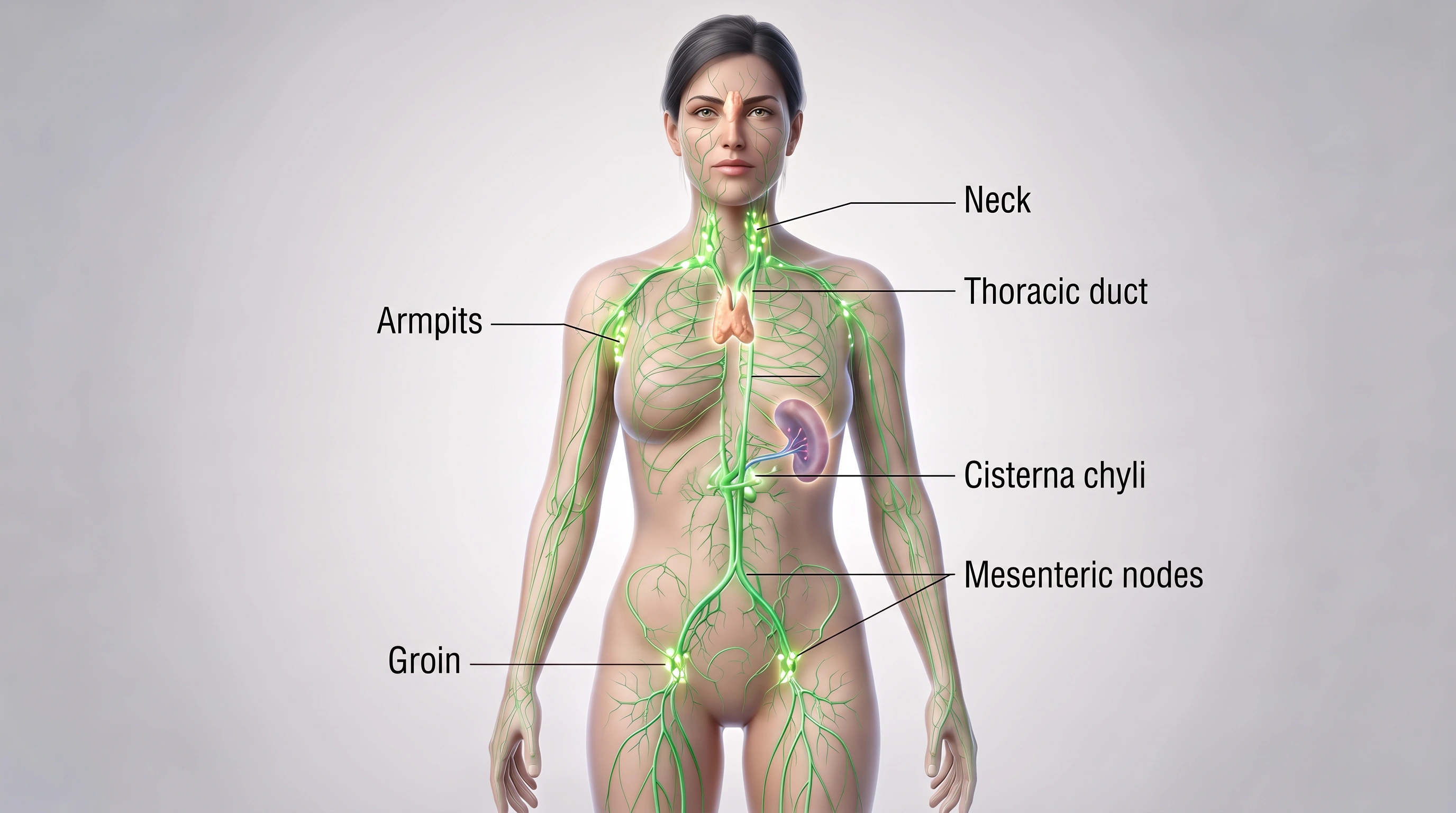
Possible consequences of long-term restriction of lymphatic drainage:
- Chronic feeling of swelling and discomfort in the breast area – lymph accumulates and causes inflammation.
- Weakened immunity – blocked lymph means a slowed-down immune system.
- Feeling of heavy arms and swollen lymph nodes in the armpits, especially after a full day in a tight bra.
„The lymphatic system is like the sewage system of a city. When you block it, waste starts to accumulate where it shouldn't.“
— Dr. Christiane Northrup, gynaecologist, author of Women's Bodies, Women's WisdomB. Breast Deformation: The Paradox Nobody Speaks About Out Loud
Bras don't actually support the breasts – they weaken the muscles and ligaments that naturally hold them. The result is a paradox that few people name:
The more you wear a bra, the more you „need“ one – because your breasts gradually lose the ability to support themselves. The muscles atrophy because they don't work. The tissue shapes itself around the bra, not around natural anatomy.
French researcher Jean-Denis Rouillon observed more than 300 women over 15 years and found that women who stopped wearing a bra had firmer breasts than those who continued wearing one. The nipples of the bra-free group lifted by an average of 7 mm per year.
C. Toxic Chemicals: What's in Direct Contact with Your Skin
Most bras – especially sports and push-up models – are made from synthetic materials that may contain hormone-disrupting substances:
- BPA (Bisphenol A) – an endocrine disruptor that mimics oestrogen.
- Phthalates – chemicals that make plastics soft; linked to hormonal disruption.
- Synthetic dyes and adhesives – used in the production of padding and prints, in direct contact with your skin all day.

Research published in Environmental Science & Technology (2020) demonstrated that synthetic textiles release microplastics with every wash. These microplastics enter the water, soil and food chain – and some of them are released directly onto the skin during wear.
3. The Psychological Deception: Why You Believe Your Body Is Wrong
„Without a bra, you're not sexy“
Advertising has been bombarding you with false ideals for decades. „Breasts must be round and upright“ – even though the natural shape of breasts is conical, asymmetrical and changes with age. „Without a bra, you look unkempt“ – even though comfortable, loose clothing is healthier and more pleasant.
„It's socially acceptable“
100 years ago, you would have been considered eccentric for wearing a bra. Today, you're considered inappropriate for not wearing one. Tomorrow? Perhaps we'll return to naturalness – just as society has gradually returned to a more natural approach to shaving, corsets or high heels.
Who decides what is „socially acceptable“? Those who profit from it.
4. Numbers Nobody Tells You
of women wear the wrong bra size. Tight bras cause back, shoulder and head pain.
Source: Oprah Magazine, 2018Synthetic bras release microplastics with every wash. They enter the water, soil and your body.
Source: Environmental Science & Technology, 2020women spend on average daily in a bra. The lymphatic system needs free tissue movement for efficient work.
Clothing wear study, EU, 2019average annual nipple lift in women who stopped wearing a bra. Muscles and ligaments gradually recovered.
Source: Rouillon, Université de Franche-Comté, 15-year study5. Lymphatic Massage: How to Help Yourself at Home
Regardless of whether you decide to limit bra use or not – the lymphatic system in the breast and armpit area needs regular care. Lymph, unlike blood, has no pump of its own. It moves through muscle activity, breathing and – massage.
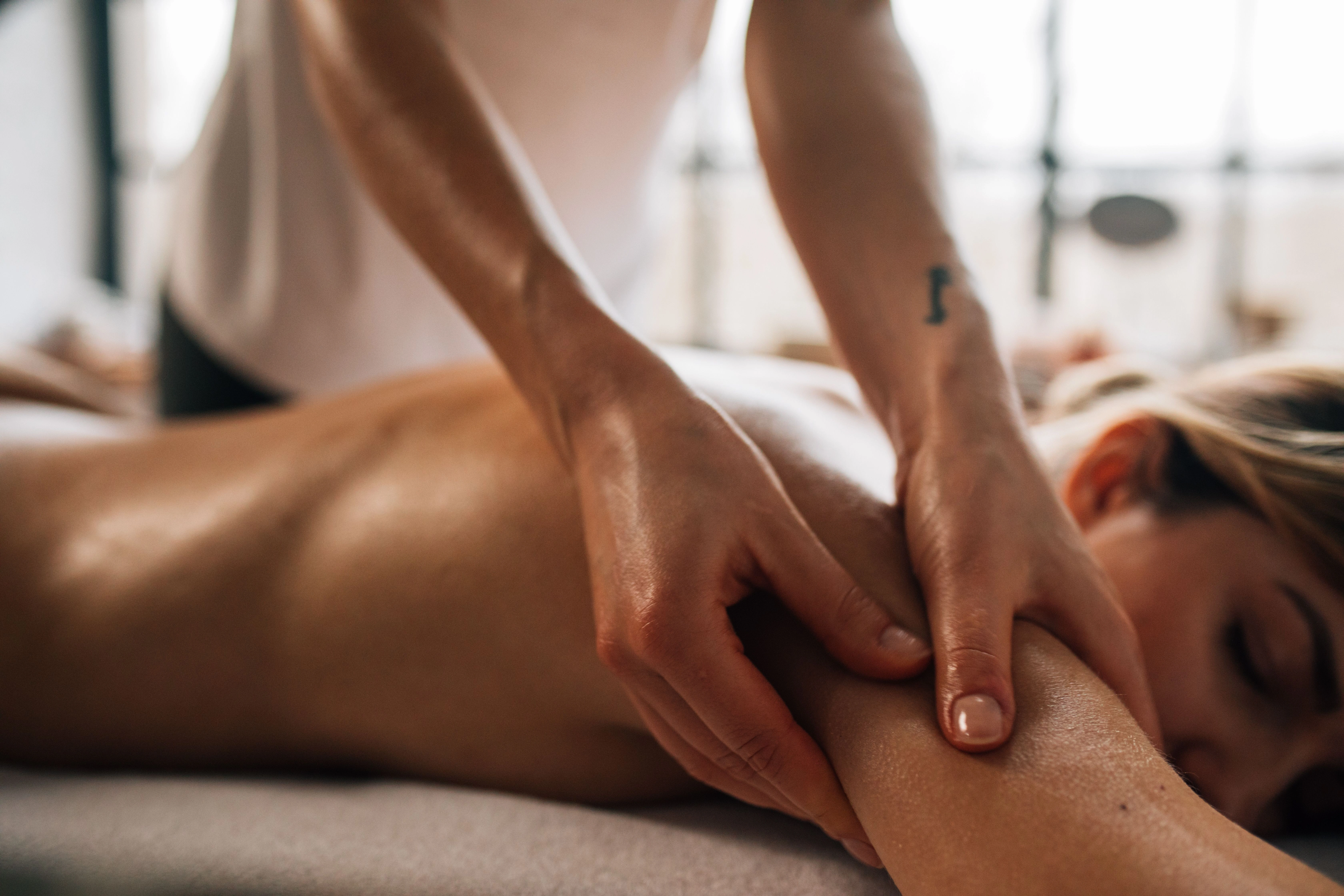
Gently place your fingers in the armpit and perform 10 slow circular movements. The pressure should be very light – lymphatic vessels lie just beneath the skin.
Move your palms from the breasts towards the armpit and then upward to the shoulder. Lymph always flows towards the heart – the massage follows this direction.
Diaphragmatic breathing is a natural pump for lymph. 5–10 deep breaths after the massage significantly supports drainage.
Lymph is largely made up of water. Without adequate fluid intake, it moves more slowly and removes waste products less effectively. Ideally 2–2.5 litres daily.
💧 Lymphatic massage works best in combination with movement, hydration and natural support from the outside. That's exactly what we mean when we say that lymph care is a daily ritual – not a one-off procedure.
Read more about how lymph affects overall body health in the article Gut and Lymph: Why Inflammation Won't Disappear Without It. And if you're wondering how chronic fatigue and lymph are connected, we also recommend Why the System Loves Your Fatigue.
Natural Support for Your Lymphatic System
Lavyl Lymph is an herbal spray specially developed to support the lymphatic system. Customers describe it as a „restart for the tired body“ – and not just in the breast area, but throughout the whole body. The formula combines oak bark, horse chestnut, lavender, sage and thyme – herbs that traditionally support tissue drainage, calm inflammation and strengthen the body's natural cleansing processes.
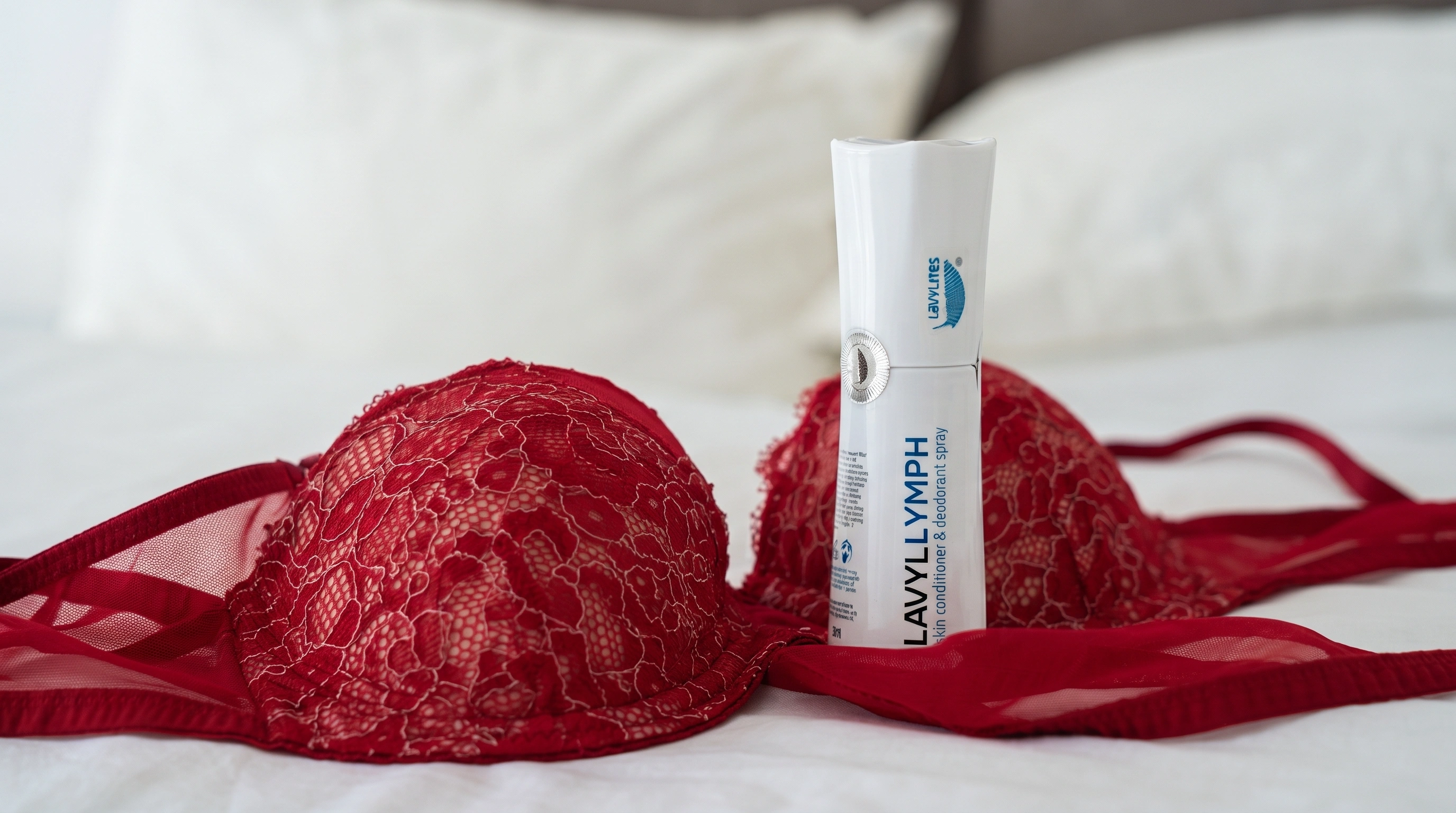
Lavyl Lymph 50 ml
Ideal for a first introduction to the product or as a travel size. 230 applications, fits easily in a handbag.
- ✓ Activates the lymphatic system
- ✓ Relieves the feeling of swelling and heavy legs
- ✓ Natural deodorant as a bonus
- ✓ Vegan, cruelty-free, alcohol-free

Lavyl Lymph 150 ml
For regular users. 720 applications – lasts for months and is significantly more economical. Customers describe it as a staple of their home medicine cabinet.
- ✓ Activates the lymphatic system
- ✓ Relieves swelling in legs, ankles and armpits
- ✓ Supports immunity during colds
- ✓ Vegan, cruelty-free, alcohol-free
„I work on my feet all day. In the evenings my legs felt like logs. After three weeks of using Lavyl Lymph the swelling is significantly reduced and my legs hurt much less. This is an absolute discovery for me.“
— Monika T., shop assistant, verified customer„I bought this product because I've had enlarged lymph nodes and swelling for years. I've only been using it for a week and it seems the lymph nodes are getting smaller. My body is also much less stiff.“
— Verified customer, product review„I have a job where I sometimes have to stand for long hours. I started having problems with swollen ankles, later also calves – and not just in the evenings, but often in the mornings after waking up too. I started using Lavyl Lymph morning and evening, spraying it on the lymph nodes on my neck, in my armpits, in my groin and under my knees. One small bottle lasted about a month and after using it all my problems disappeared. After a 6-week break I bought a second bottle for maintenance, I now use it only in the evenings, I'm still free of all complaints and I feel great.“
— Míša, loyal customer6. What to Do Instead of Wearing a Bra? A Practical Guide
Gradual weaning – step by step
Wear a bra only during sport – and even then choose a wire-free model made from natural materials.
Replace tight underwired bras with a looser bralette or soft sports top.
Try going without a bra at home, while sleeping, while walking. The body gradually adjusts.
Switch to natural alternatives – cotton, linen or hemp allow the skin to breathe.
Natural alternatives
Support without pressure, breathable materials. Ideal for everyday wear and light movement.
Comfortable, stylish, wire-free. Suitable for smaller and medium breast sizes.
Looser cuts and layers of clothing naturally cover and support without any pressure.
The healthiest option for the lymphatic system. Social pressure is real – but it's your choice.
How to strengthen the breasts naturally
- Chest muscle exercises – push-ups, swimming, bench press. Muscles hold the breasts naturally.
- Lymphatic massage – improves drainage and blood flow to the tissue (see above).
- Healthy diet – vitamin E, omega-3 fatty acids, zinc support tissue firmness.
- Hydration – lymph needs water to move. 2–2.5 litres daily is the foundation.
7. Conclusion: It's Time to Wake Up
A bra is not an innocent piece of clothing. It is an object that arose from a business decision, was normalised by advertising and today we wear it automatically – without asking what it does to our body.
- Tight bras restrict lymphatic drainage in the breast and armpit area.
- Synthetic materials are in direct contact with sensitive skin all day.
- Breast muscles and ligaments weaken with long-term bra use.
- The lymphatic system needs free tissue movement, hydration and active care.
But you have a choice. You can continue wearing one automatically without thinking – or start asking questions and making conscious decisions. Your body will thank you for it.
Call to action: Try going one day without a bra this week – at home, on walks and while sleeping. Spend 5 minutes on a lymphatic massage of the armpits. And give your body the natural support it deserves.
Answers to common objections
Being well-groomed isn't about a bra – it's about confidence. Many women look naturally beautiful without one. And the confidence that comes from accepting your own body is more attractive than any underwire.
Try a soft bralette or a sports top made from firm material first. Gradually strengthen your back and chest muscles. And support the lymphatic system – overloaded lymph in the breast area can worsen back pain.
The restriction of lymphatic drainage by tight clothing is a physiological fact, not a theory. It is equally proven that synthetic textiles release microplastics. How you choose to act on this information is your decision.
If they care about your comfort and health, they'll support you. If not, that's a good prompt for a conversation about whose needs come first in the relationship.