








Lead, cadmium, mercury and arsenic enter the body quietly: through food, water, air and cigarette smoke. Some of them stay for years, even decades. Find out where they build up, why the body clears them so slowly and what you can do about it.
Where heavy metals come from
The World Health Organization (WHO) lists arsenic, cadmium, lead and mercury among 10 chemicals or groups of chemicals of major public health concern. These are not exotic laboratory poisons. They are elements of the Earth's crust, and human activity spreads them further.
- Food: cadmium and lead are found in cereals, potatoes, leafy vegetables and mushrooms.
- Water: arsenic gets into drinking water from the bedrock. The WHO recommends less than 10 µg per litre.
- Fish: in the marine food chain, mercury turns into methylmercury and builds up in fish.
- Smoke and combustion: cigarette smoke, burning fuels and industry.
- Home and work: old paints and pipes (lead), heavy industry and metal grinding.
What tests from 2025–2026 (USA) showed. In 2025, Consumer Reports tested 23 protein powders and drinks. In more than two thirds of them, a single serving contained more lead than its own daily level of concern (0.5 µg). Manufacturers argue that this threshold is exceptionally strict. In 2026, the organisation tested 48 baby foods and referred to a review of 75 studies. According to it, more than 60 % of 831 products contained detectable lead, cadmium and arsenic, and 34 % contained mercury.
Detectable does not mean dangerous. But it shows what kind of exposure we are talking about: small amounts, but over a long time and from many sources.

Why the body clears them so slowly
The body burns and breaks down sugar or fat. A metal cannot be burned, because it is an element and stays an element. The body can only bind it to proteins, store it, or excrete it in urine and stool. And excretion is often slow.
This is measured by half-life, the time it takes for half of a substance to leave the body.
- Cadmium in the kidneys: an estimated 6–38 years
- Lead in the bones: an estimated 10–20 years
- Inorganic arsenic: about 10 hours. It leaves quickly, but we take it in again and again from water and food.
- Mercury: the half-life depends on its form.
The half-life, the time it takes for half of a substance to leave the body, is estimated at 6–38 years for cadmium in the kidneys and 10–20 years for lead in the bones. In the meantime, we keep taking in further doses, which accumulate in the body and, at higher concentrations, can cause health problems.
Heavy metals behave in the body like a ship's anchor: they dig in and hold on until we give them the right nudge.
Where heavy metals build up in the body
Bones
Lead behaves much like calcium, so it heads for the bones. According to available data, more than 90 % of the lead in the body is stored there.
Kidneys and liver
Cadmium builds up mainly in the kidneys and liver. This is exactly where its half-life is counted in decades.
Nervous system
Mercury (especially methylmercury from fish) and lead are neurotoxins, which means substances that damage nerve tissue.
Joints
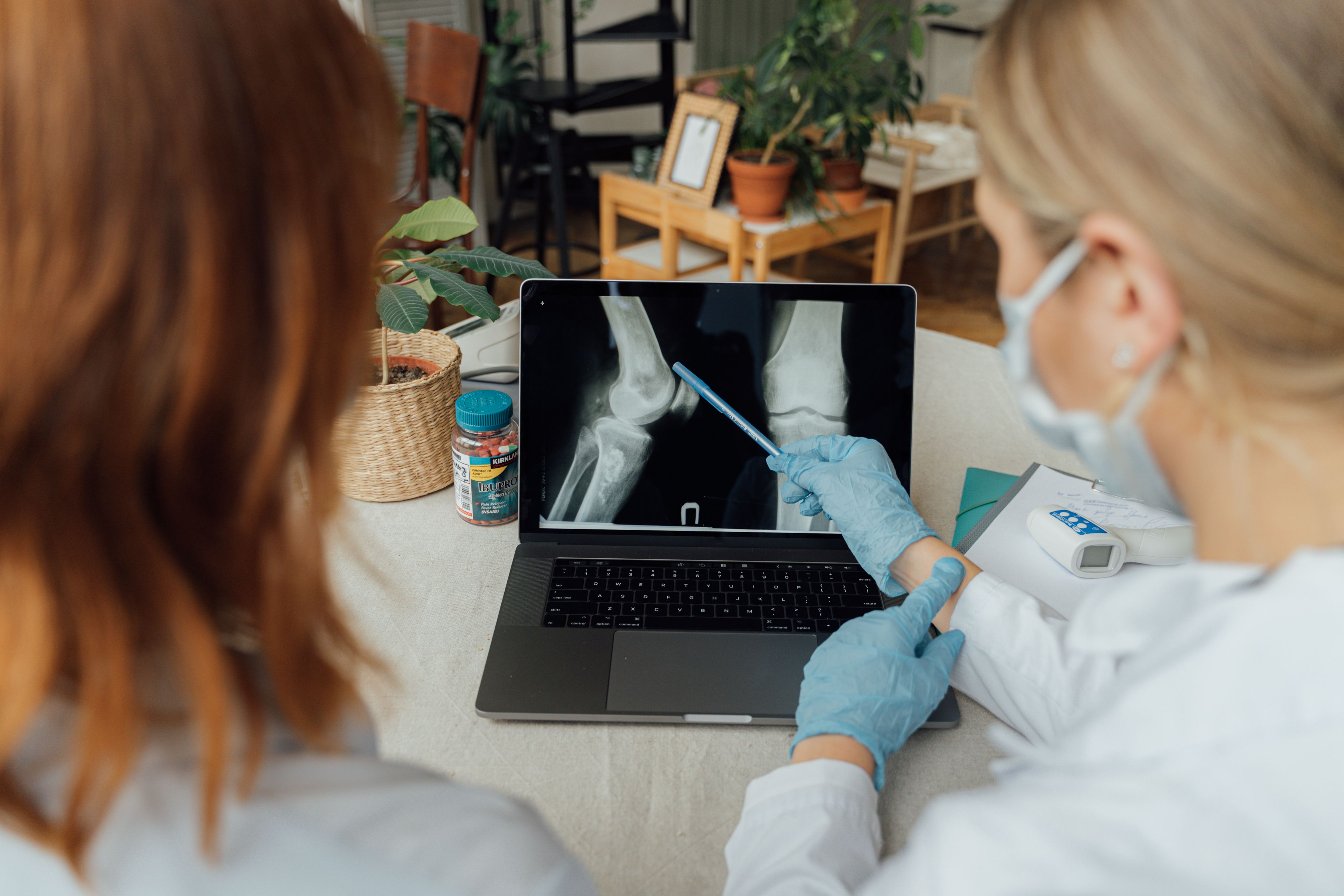
In mice, mercury was deposited in the lining of the joints and in cartilage cells. In humans, we so far have mainly statistical associations (see below).
When metals accumulate: two stories from history
Itai-itai, Japan. In the Jinzū river basin in Toyama Prefecture, rice was irrigated with water contaminated with cadmium from upstream. People who ate that rice and drank the local water developed damaged kidneys and bones. Their bones became so brittle that they broke during ordinary movement. The disease was named itai-itai, Japanese for “ouch, ouch”. The cadmium built up over years, and the consequences appeared decades later.
Minamata, Japan. In 1956, two little sisters with movement disorders and convulsions were brought to the hospital in Minamata. The cause was methylmercury from the wastewater of a chemical factory. It built up in the fish that local people ate. The discharge continued until 1968, and the neurological consequences are often irreversible.
Both tragedies involved extreme exposure, and an ordinary person never comes near such doses. But they show the principle: metals build up silently, and the consequences can arrive with a delay.
What we know about the health effects
- The International Agency for Research on Cancer (IARC) classifies arsenic and cadmium as Group 1 carcinogens, meaning substances with proven effects in humans.
- Cadmium puts long-term strain on the kidneys and bones.
- Lead and mercury damage the nervous system.
Joints, autoimmunity and weight loss: what is certain and what is not
Joints. An analysis of US NHANES data looked for a link between metal levels and a diagnosis of arthritis. Cadmium and arsenic metabolites were among the factors associated with a higher likelihood of diagnosis, whereas lead and mercury in the blood were not. The results are therefore not consistent, and this is a statistical association, not proof of cause. An experiment in mice (Frontiers in Medicine, 2019) in turn showed that mercury is deposited precisely in the cells of the joint lining and cartilage.
Autoimmunity. A review paper in Autoimmunity Reviews (2026) states that occupational and environmental exposure to heavy metals is increasingly linked to the mechanisms of rheumatoid arthritis, in particular oxidative stress and disturbed immune regulation. Experts at the Autoimmune Institute speak of strong links between arsenic, cadmium and autoimmune diseases. Autoimmunity, however, always has several triggers: genes, infections, hormones. Metals are one suspected factor, not the only known cause.
Weight loss. Norwegian researchers followed patients for a year after bariatric surgery, with an average weight loss of 32.3 kg. Blood lead rose by 73 %, because bone remodelling speeds up during weight loss and lead is released from the bones. Mercury (−31 %) and cadmium (−27 %), on the other hand, fell. A US study from 2019 also showed that after rapid weight loss, substances stored in fat rise markedly in the blood. These were not metals, though, but persistent organic pollutants (PCBs, pesticides).
From practice, not from studies: some people describe unpleasant sensations during rapid weight loss, which they link to the release of stored substances. Whether and how large a role metals play here has not yet been demonstrated. Please discuss any major change in weight with your doctor.
What demonstrably works and what does not yet
Medical chelation therapy. In confirmed poisoning (raised lead, mercury or arsenic levels in blood or urine), chelation therapy is used under the supervision of a doctor or toxicologist. Substances such as DMSA, DMPS or EDTA are used, which bind the metal and help remove it. It always involves a diagnosis, laboratory monitoring and medical supervision. The source of exposure is also removed first. If you suspect acute poisoning, contact your local poison control centre or call the emergency number (112 in the EU, 911 in the US).
Natural approaches. For chlorella, coriander or zeolite, we have no human data confirming that they remove heavy metals from the body. There are laboratory and preliminary studies, but no proven method. A proven natural way to remove metals from the body does not yet exist.
What you can do right now:
- Reduce sources: do not smoke and avoid smoke, as cigarette smoke is a significant source of cadmium.
- Check your water: if you drink water from your own well, have it tested for arsenic and other substances.
- Vary your food: do not build your diet on a single food, for example only cereals or mushrooms.
- Protect yourself at work: use protective equipment in industry and when sanding old paint.
- See a doctor if in doubt: metal levels can be measured in blood and urine.
Our experience: the heavy metal course step by step
Important notice. The information in this section is based on customer experience and the practice of LAVYcosmetics, not on clinical studies. Solvyl Fullflex is not a medicinal product or a substitute for medical care. The course is not suitable for pregnant or breastfeeding women.
Still, we know what we see in practice: people who have done the heavy metal course come back to it. Based on the experience of our customers and our practice, it is a way to gradually reduce the burden of heavy metals. We proceed in three steps:
- Preparation. So that the released metals have a way out, we ideally first support the digestive and excretory system (Haevyl Impulse) and the lymphatic system, the body's “drainage” (Lavyl Lymph). You will find the length of the preparation in the instructions.
- The course. Solvyl Fullflex is taken 3× a day, 10 drops in a glass of water, and the dose can be gradually raised to 20 drops. According to the instructions, the Solvyl CC spray is also included in the course.
- Daily care. Between courses you can use the Solvyl range for daily hygiene (Clean, Hair, Body). It is especially suitable for people who live or work in a polluted environment.

How many bottles? One bottle of Fullflex lasts 3–5 weeks and is better for a start than none. For a more thorough course, plan on two bottles. With long-term exposure, for example in heavy industry or a polluted environment, even three, which is roughly three months. It depends on how burdened a person is. It is best to call our advice line.
How often? Our recommendation is ideally once a year. If you have never done the course, start and do not wait for perfect conditions. Repeating it at least once every few years later is better than never.
For completeness: Solvyl Fullflex contains, among other things, extracts of coriander and bladderwrack. We do not claim that coriander alone demonstrably removes metals, because that has not been shown. We rely on customer experience and our practice.
“…exactly as instructed. Haevyl juice, Lymph, Pentyll and then Solvyl Fullflex with that CC. I always feel like I've been reborn.”
Customer review on lavycosmetics.com
Products for the heavy metal course
You will find the order and length of each step in the instructions we enclose with your order. The course is not suitable for pregnant or breastfeeding women.
Solvyl Fullflex 30 ml
Herbal drops for a glass of water that support the body's natural elimination of heavy metals. One bottle lasts 3–5 weeks.
Lavyl Lymph 50 ml
Supports the lymphatic system, the body's “drainage”. Part of the preparation before the course.
Haevyl Impulse 450 ml
A herbal concentrate that supports the digestive and excretory system. Part of the preparation before the course.
Solvyl CC 50 ml
A spray from the Solvyl range that, according to the instructions, is added to the course after Fullflex.
Solvyl Clean 200 ml
A shower gel for daily hygiene. You will find the whole Clean, Hair and Body range in the Solvyl category.
Not sure how many bottles to choose?
It depends on how burdened you are. We are happy to advise you by phone: +420 604 400 755 (Mon–Fri 9 am–5 pm).